MAD MEN / “Time Zones”

draper.brown

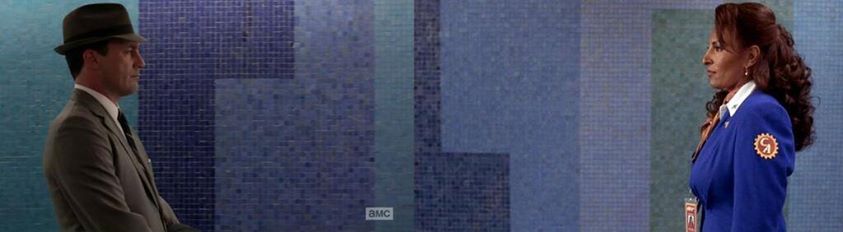
And now Mad Men is back. I’ll be covering it weekly for Dear Television, and I started out this week by writing about the show’s obsession with spaces. Particularly, the airplane:

“So it’s not insignificant that the big, emotionally-freighted set-piece of ‘Time Zones’ occurs at 30,000 feet in TWA first-class…Tight quarters, nighttime, brushed shoulders, the curve of the fuselage pushing people together, the air literally re-pressurized — this is one of few spaces where we have to act like this type of exaggerated and immediate intimacy is normal.”

“Plane in Vain”

GAME OF THRONES

stark.hound


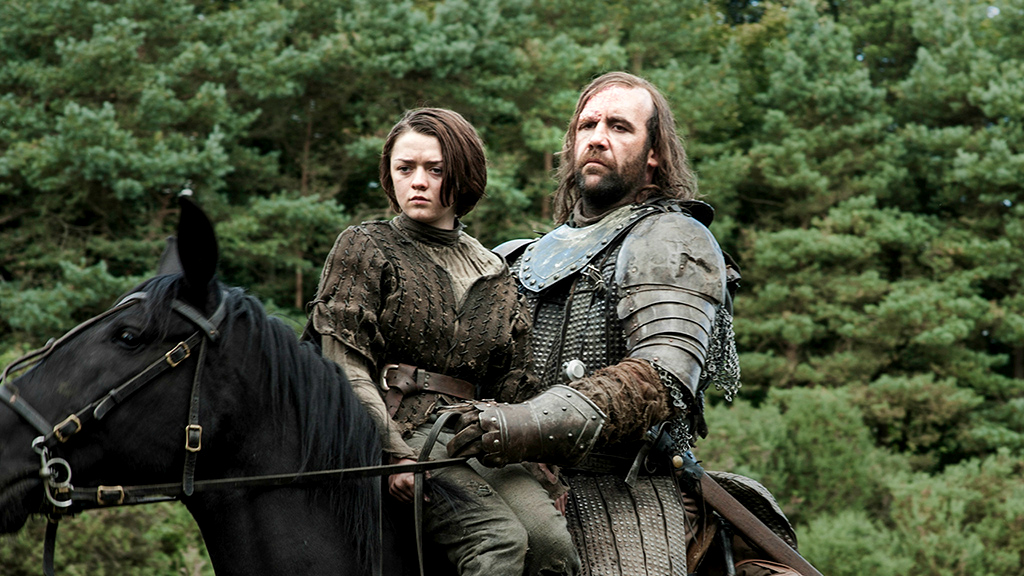
So, Game of Thrones is back, and I’ve been writing quite a lot about it. First, for Dear Television, I covered Arya Stark’s revenge plot and the idea of marginality on the show:

“Game of Thrones isn’t brave because it kills its protagonists. It’s brave because it doesn’t have any.”

“Arya Stark, FTW”

And then, this week, in my debut essay for The Daily Beast, I wrote about That Thing That Happened To That One Character and the afterlives of TV deaths:

“While the loss of a major character obviously places a limit on narrative—one less character, one less narrative arc, one less set of possible combinations—these shows have become uncommonly invested in the possibilities opened up by an abrupt exit.”

“Life After TV Death”


LETTERMAN / ELLEN

letterman-93d51468a0818f0abddaad608f37d3b17a24ef52-s6-c30


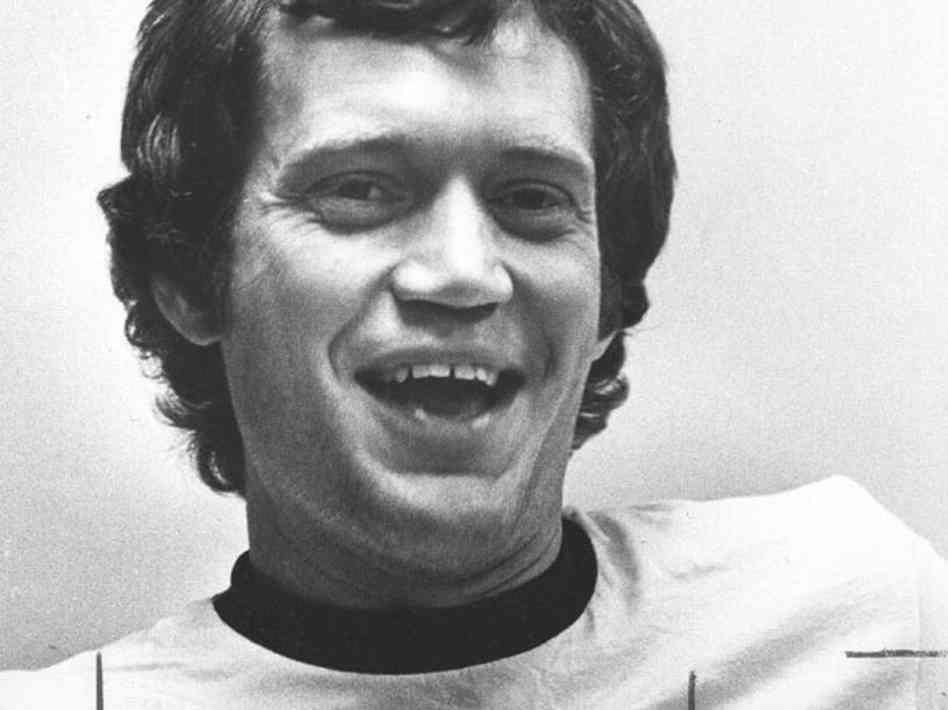
This past week, David Letterman, my favorite talk show host ever, and probably one of my favorite media personalities, announced that he’d retire next year. I wrote a piece for Slate about why Ellen Degeneres would be a worthy, even perfect, successor:

“There are no jokes on Letterman. His monologues from the desk are networks of inference, nudge, and innuendo. Watch him even now: He’s barely articulate, but he is communicating. The anachronistic gesture of drinking from the desk—it’s 11:30, time for a drink, but Letterman, unlike us, is still at work!—showcases, above all, the chaotic potential of television at that time of night. There is no “after hours” on network television. There is no time when it’s-just-you-and-me. But there is, as Letterman knows, the possibility of faking it.”

“Dancing and Drinking the Late Night Away”

BROAD CITY 2

glazerklee


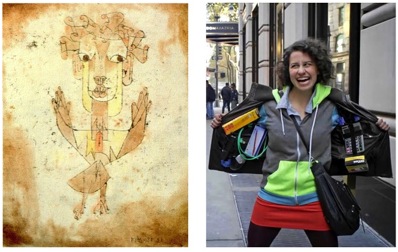
So Dear Television and I returned to our favorite new show Broad City at the end of its first season. I wrote an experimental, semi-silly, semi-serious ode to the dance moves of Ilana Glazer, with references to Walter Benjamin, the In Living Color Fly Girls, film scholar Donald Crafton, Spike Lee, and Ellen Degeneres:

“To say that Broad City is interested in possibility rather than the slow death of it is not to say that it’s unaware of the way the world works. People are cruel on Broad City, and stupid decisions have consequences. James Murphy, the musician and fellow dancing Brooklynite, sang: ‘I wouldn’t trade one stupid decision for another five years of life.’ And Broad City, like the best dance music, is about the joy of stupid decisions and the way that living through your desires, living through the connection you feel to another person, makes you bulletproof to cruelty and anger, if even only momentarily. The feeling produced is more profound than the thing producing it. Ilana Glazer might just be dancing because she feels like it, but I think it’s important that somebody is.”

“Theses on the Dance Moves of Ilana Glazer”
TRUE DETECTIVE

tdfinale

Dear Television commemorated one fantastic season of television by doing a roundtable on the True Detective finale. Follow the link below to my thoughts:

“If we wanted to see this man’s conversion, it was in the way he fought with this force of evil, the strength he exerted to keep this bad man down, the way the darkness enveloped him and, within the frame, made him a source of light.”

“Darkness, Yeah”


PHILIP SEYMOUR HOFFMAN

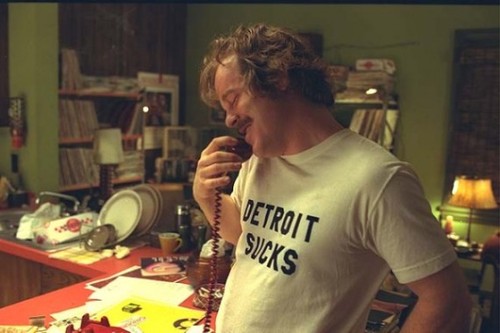
hoffman.At Avidly, I wrote a tribute to my favorite actor, Philip Seymour Hoffman, and how good he was at talking on the phone in movies.

“But it’s also not wrong to think back on these scenes and to wonder what they reveal of this man’s art, why these moments in particular can represent his work so fully even in their constraint. As we are beginning to reckon with the distance we now feel from an actor who had seemed so intimately communicative with us as viewers of film, we should ask why he was so reliably able to reach us when he was alive.”

“Where I’m Calling From: Philip Seymour Hoffman, 1967-2014”


BROAD CITY

broadcityThis week for Dear Television, I reviewed Comedy Central’s new sketchy, sketch comedy series, Broad City:

Broad City was born in improv theaters and on the internet. It’s got a gritty hand-held feel, an associative style, and it relies less on a set of characters or observations than it does on a kind of madcap, accretive sensibility. In other words, these episodes simply turn Abbi and Ilana loose in the city and see what happens. The bits are staged, of course, but there’s a spontaneity to the whole exercise that is unique on Comedy Central right now.”

“Sketchy Comedy”


TRUE DETECTIVE

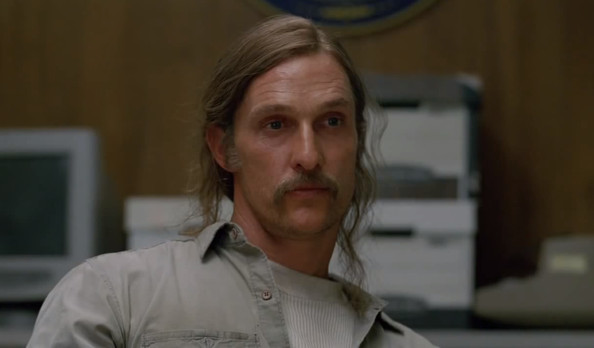
truedThis week for Dear Television at The Los Angeles Review of Books, I wrote about the gnarly, haunting, maybe brilliant True Detective and the completely magnetic screen performance at its center:

“So far, the most compelling reading I can figure for this somewhat inscrutable show is that it is only masquerading as a two-hander, gritty buddy cop series. [Matthew] McConaughey’s Rust Cohle is an engine, and everything and everybody this show can find is being scooped up and thrown into the furnace.”

“Heavenly Creatures”


GIRLS, WEEK ONE

hannah

Dear Television is back on the Girls beat for The Los Angeles Review of Books. Here’s my post on the first new episodes of season three.

“One of the possible trajectories of this show — and one still alive to some extent or another — is the slow or catastrophic dissolution of the hermetic core that has so frequently been criticized as too insular, too privileged, too much… In this spirit, it’s been frustrating and fun to watch possible Extinction-Level Events — like Donald Glover’s much-touted black Republican or Kathryn Hahn’s achingly, soulfully harried mother — hurtle toward the series only burn up upon entry into Planet Horvath’s atmosphere.”

“Your Urine-Soaked Life”


MERYL STREEP!

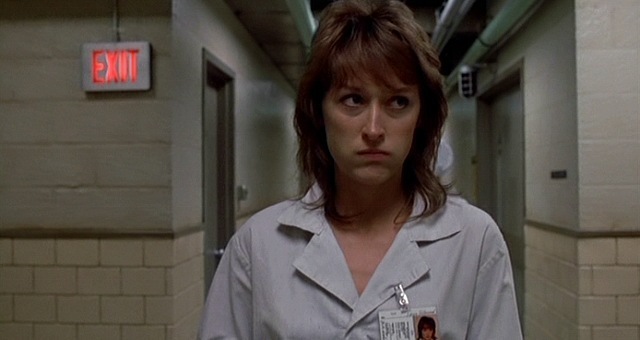
Meryl-in-Silkwood-meryl-streep-4552858-640-340This is my debut essay for Slate Book Review on Karina Longworth’s extraordinary critical biography of Meryl Streep and why film acting remains such a mystery to scholars and critics.

“We know that there are processes involved in the creation of a screen performance, but, more often than not, even the process stories we tell about actors are about a kind of prestidigitation—Daniel Day-Lewis becomes possessed by Abraham Lincoln or Charlize Theron disappears within the grotesque visage of a serial killer. We know how acting works, but there is a horizon beyond which the craft remains opaque, even mystical.”

“Disenchantment Artists”